Pneumatic Wheels
Frequently Asked Questions
Advantages of Pneumatic Wheels
Pneumatic wheels are designed to provide exceptional shock absorption and smooth mobility, even on uneven or outdoor surfaces. Their air-filled tyres cushion loads against vibrations and impacts, protecting both the goods and the equipment itself. The TENTE portfolio includes different profiles (line and block profile), wheel centres (pressed steel or polypropylene), and bearing options, catering to different individual mobility needs. While tyre construction and profile shape influence damping and grip, the castor housing is equally decisive for overall load capacity, stability, and longevity. Selecting the right wheel–housing combination ensures smooth operation, safety, and sustained performance across your application.
TENTE pneumatic wheels offer various key benefits:
Outstanding Shock Absorption – Air-filled tyres act as a cushion, dampening shocks and vibration that occur on rough ground, thresholds, and outdoor routes. This makes pneumatic wheels a strong choice for transporting goods in rough terrain.
Low-Noise Movement – The soft, flexible tread reduces rolling noise and provides smooth movement, even on rough terrain. This way pneumatic wheels contribute to a quieter working environment.
Reliable Traction on Irregular Surfaces – With block or line tread patterns available, pneumatic wheels maintain secure grip on gravel, outdoor paths, and uneven floors. This improves controlled handling and directional stability in challenging conditions.
Protection of Floors and Equipment – The soft tyre spreads the load over a larger contact patch, lowering point pressure and minimising floor damage. Reduced impact forces also lessen wear on application frames, fittings, and transported goods.
Types of Pneumatic Wheels
TENTE pneumatic wheels are offered with different profiles and centres to match your use case. Typical choices include rip-profile or block-profile tyres on pressed steel or polypropylene centres and roller bearings, plus versions with precision ball bearings to reduce push/pull forces. Pairing each wheel with the appropriate castor housing ensures the required load capacity, stability, and longevity in daily operation.
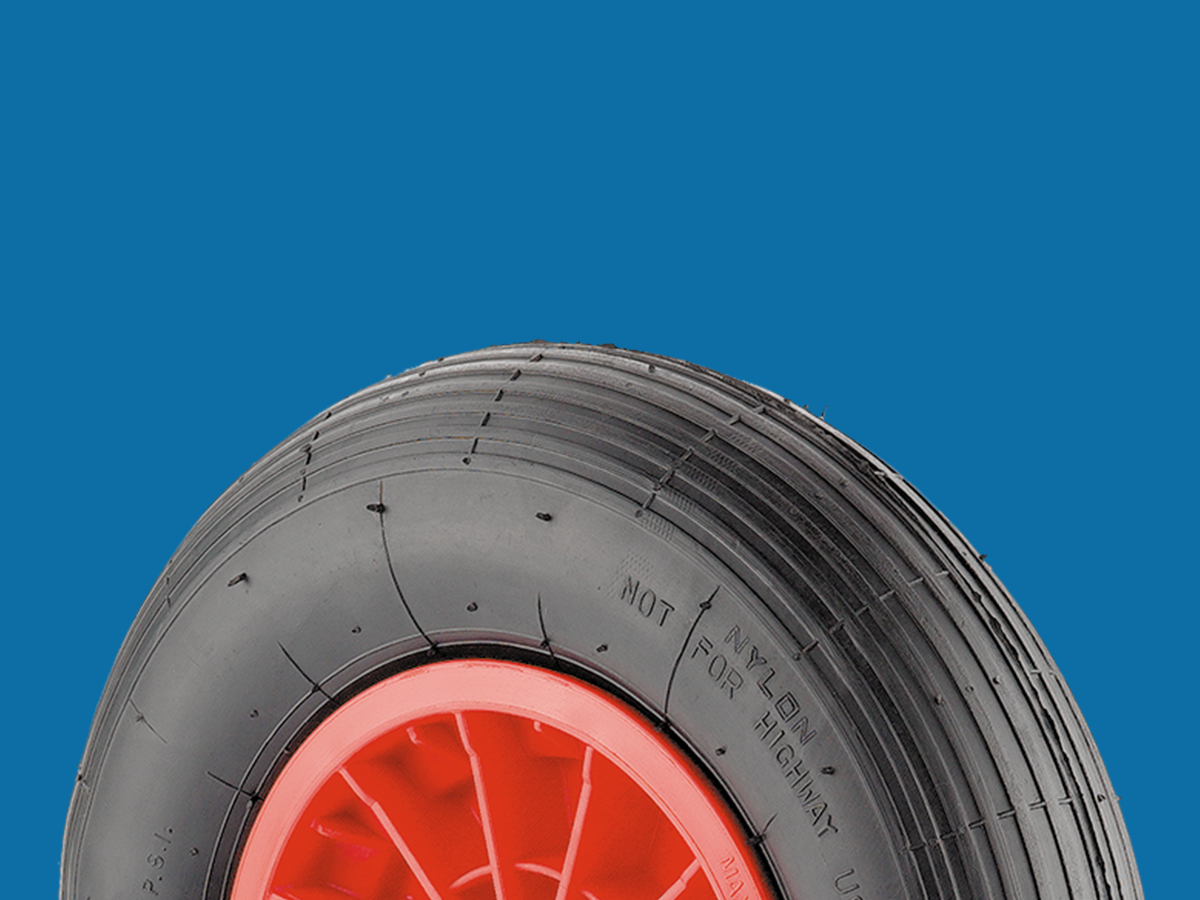
Pneumatic Wheels with Rip-Profile
Rip-profile pneumatic wheels are built for smooth, straight rolling on firm surfaces like concrete, asphalt, and paved paths. The rips act like guides that keep the wheel moving where you point it, so applications can be moved easily and stay on course with less effort – whether you are pushing or towing. Our portfolio includes a variety of configurations – different sizes, wheel body materials, and bearings. Our pneumatic wheels with rip-profile durable TENTE Puretech air tyres and are available in 200 mm or 400 mm wheel diameters. Our 200 mm options offer load capacities of 75 kg per wheel, while the 400 mm options are capable of handling loads of up to 250 kg per wheel.
Pneumatic Wheels with Block-Profile
Block-profile pneumatic wheels are engineered for high traction and stability on uneven, softer, or outdoor surfaces. The pronounced tread pattern engages surfaces such as gravel, grass, and rough paths, maintaining secure traction during starts, stops, and turns under load. The air-filled tyre cushions bumps and irregularities, protecting the load and enhancing handling comfort. Our pneumatic wheels with block-profile durable TENTE Puretech air tyres and are available in 260 mm and 300 mm wheel diameters. Depending on the configuration these pneumatic wheels can handle loads between 150 kg and 200 kg each. One representative for this type of pneumatic wheel is our PQO wheel series. It features a wheel centre made of polypropylene, combined with a plain bearing and can be configured with different axle hole diameters, hub lengths, and ply ratings.
Fields of Application for Pneumatic Wheels
Pneumatic wheels are chosen wherever shock absorption, noise control, and smooth movement over uneven ground are required. The air-filled tyre cushions impacts and vibration to protect both the load and the equipment. For most applications, the wheel must be paired with an appropriate castor housing – matched to the required load, environment, and duty—to ensure the right load rating, lateral stability, and service life. In industrial settings, pneumatic wheels support applications like waste disposal equipment, container construction units, machine construction tools and more, enabling dependable travel across outdoor yards, loading areas, and rough flooring. Their excellent vibration-dampening also make them a common choice for ceramic and glass manufacturers, where delicate goods have to be handled with care. In logistics, they for example help keep roll pallets and dollies, roll cages, and post logistic systems moving smoothly.