

Wheel 125 mm
The Elastech wheel is a castor wheel body with a diameter of 125 mm and a tread width of 40 mm, featuring a soft polypropylene tread material designed for smooth operation. This wheel is engineered to support a static load capacity of 320 kg, whilst maintaining a dynamic load capacity of 160 kg at speeds up to 4 km/h, making it suitable for applications requiring reliable performance across both stationary and mobile operational scenarios.

Wheel 80 mm
The Basetech Wheel is a polypropylene castor wheel with an overall diameter of 80 mm and a tread width of 34 mm, featuring a hub length of 44.4 mm and an axle hole diameter of 12.1 mm. The tread material is identical with the wheel body, constructed entirely from polypropylene for durability and lightweight performance. This wheel is equipped with a plain bearing for smooth rotation and is designed to support a static load capacity of 250 kg, whilst maintaining a dynamic load capacity of 125 kg at speeds up to 4 km/h. The Basetech Wheel is ideally suited for applications including roll cages and store fixtures and display systems, making it a versatile solution for commercial and industrial environments requiring reliable castor wheel performance.

Wheel 125 mm
The Basetech Wheel is a polypropylene castor wheel designed for roll cages and store fixtures and display applications, featuring a diameter of 125 mm with a tread width of 40 mm. The wheel body is constructed from polypropylene, with the tread material being identical to the wheel body, and is equipped with a roller bearing for smooth operation. The hub measures 44.4 mm in length, whilst the axle hole diameter is specified at 12 mm to accommodate standard castor fittings. This wheel is engineered to support a static load capacity of 400 kg, with a dynamic load capacity of 200 kg at a speed of 4 km/h, making it suitable for demanding commercial and industrial environments requiring reliable mobility solutions.
Wheel 125 mm
The Basetech Wheel is a polypropylene castor wheel featuring a diameter of 125 mm with a tread width of 40 mm, identical in material composition to the wheel body. The hub length measures 48 mm, and the wheel is fitted with a roller bearing for smooth operation. The axle hole diameter is 12 mm, accommodating standard castor fittings. This wheel is engineered to support a static load capacity of 400 kg, whilst maintaining a dynamic load capacity of 200 kg at speeds up to 4 km/h, making it suitable for both stationary and mobile applications in industrial and commercial environments.

Wheel 200 mm
The Duratech Wheel is a precision castor wheel manufactured from polyamide, featuring a diameter of 200 mm with a tread width of 50 mm that is identical with the wheel body material. The hub measures 60 mm in length, and the axle accommodates a hole diameter of 20.1 mm, designed to integrate seamlessly with standard castor assemblies. Equipped with a precision ball bearing for smooth operation, this wheel delivers exceptional performance across diverse industrial applications including automotive OEM, container construction, electronic systems and clean-room technology, machine construction, production and platform trolleys, roll cages, store fixtures and display systems, and transport equipment. The wheel supports a static load capacity of 1600 kg and a dynamic load capacity of 800 kg at 4 km/h, making it suitable for demanding operational environments requiring reliable load-bearing performance and durability.


Wheel 160 mm
The Elastech wheel is a precision castor wheel engineered for demanding industrial applications including AMR systems, automated shuttle systems, automotive OEM, catering carts and meal delivery systems, container construction, fire fighting technology, machine construction, post logistic systems, production and platform trolleys, professional cleaning carts, roll cages, scaffolding, tool cabinets, transport equipment and work benches. The wheel features a diameter of 160 mm with a tread width of 50 mm, constructed from elastic tire material that is non-marking and vulcanised for durability and floor protection. The hub length measures 60 mm, whilst the axle hole diameter is 20 mm, accommodating standard castor fittings. The wheel is mounted on a precision ball bearing and features an aluminium body for lightweight strength. Static load capacity reaches 700 kg, whilst dynamic load capacity is rated at 280 kg at 6 km/h or 350 kg at 4 km/h, making it suitable for both stationary and mobile applications requiring reliable performance and smooth operation.

Wheel 260 mm
The Puretech air wheel is a pneumatic tyre castor wheel featuring a 260 mm diameter with an 85 mm tread width and a block profile design. The wheel hub measures 74 mm in length and accommodates a 25 mm axle hole diameter. Constructed from polypropylene with a roller bearing assembly, this wheel delivers a static load capacity of 150 kg and a dynamic load capacity of 150 kg at speeds up to 3 km/h. The pneumatic tyre construction provides excellent shock absorption and smooth operation across various floor surfaces, making it suitable for applications requiring reliable castor performance in industrial and commercial environments.

Wheel 400 mm
The Puretech air wheel is a pneumatic tyre castor wheel featuring a 400 mm diameter with a 100 mm tread width and block profile design. The wheel is constructed from polypropylene and is equipped with a roller bearing for smooth operation. The hub measures 74 mm in length, whilst the axle features a 25 mm hole diameter for secure mounting. This wheel demonstrates robust load-bearing capabilities, with a static load capacity of 400 kg and a dynamic load capacity of 200 kg at speeds up to 3 km/h, making it suitable for demanding industrial and commercial applications requiring reliable castor performance.
Wheel 125 mm
The Elastech wheel is a precision castor wheel engineered for demanding industrial applications including AMR systems, automated shuttle systems, automotive OEM, catering carts and meal delivery systems, container construction, fire fighting technology, machine construction, post logistic systems, production and platform trolleys, professional cleaning carts, roll cages, scaffolding, tool cabinets, transport equipment and work benches. The wheel features a diameter of 125 mm with a tread width of 50 mm, constructed from elastic tire material that is non-marking and vulcanised for durability and floor protection. The hub length measures 60 mm, whilst the axle hole diameter is 25 mm, accommodating standard castor fittings. The wheel is mounted on a precision ball bearing and features an aluminium body for lightweight strength. Load capacity specifications include a static load rating of 600 kg, with dynamic load ratings of 240 kg at 6 km/h and 300 kg at 4 km/h, making this wheel suitable for both stationary and mobile applications requiring reliable performance and consistent load handling across diverse industrial environments.

Wheel 125 mm
The Elastech wheel is a precision castor component engineered for demanding industrial applications, featuring a 125 mm diameter with a 40 mm wide elastic tire in black vulcanized material mounted on a polyamide body. The wheel incorporates a roller bearing for smooth operation and is designed with a hub length of 58 mm and an axle hole diameter of 15 mm to ensure compatibility with standard castor assemblies. This wheel delivers a static load capacity of 500 kg and a dynamic load capacity of 250 kg at speeds up to 4 km/h, making it suitable for a comprehensive range of applications including AMR systems, automated shuttle systems, automotive OEM requirements, catering carts, container construction, fire fighting technology, machine construction, post logistic systems, production and platform trolleys, professional cleaning carts, roll cages, scaffolding, tool cabinets, transport equipment, and work benches.
Wheel 125 mm
The Elastech wheel is a precision castor component engineered for demanding industrial applications, featuring a diameter of 125 mm with a tread width of 40 mm and a hub length of 58 mm. The wheel is constructed from polyamide with an elastic tire, non-marking, vulcanized tread that ensures superior grip and floor protection across diverse environments. The axle accommodates a hole diameter of 15 mm and incorporates a roller bearing for smooth, reliable rotation. This wheel demonstrates exceptional load-bearing capabilities, with a static load capacity of 500 kg and a dynamic load capacity of 250 kg at speeds up to 4 km/h, making it ideally suited for use in AMR systems, automated shuttle systems, automotive OEM applications, catering carts, container construction, fire fighting technology, machine construction, post logistic systems, production trolleys, professional cleaning carts, roll cages, scaffolding, tool cabinets, transport equipment, and work benches.

Wheel 100 mm
The Elastech wheel is a precision castor wheel engineered for demanding industrial applications, featuring a polyamide body with a 100 mm diameter and a 34 mm wide elastic tire, non-marking, vulcanised tread that ensures reliable performance across diverse environments. The wheel incorporates a precision ball bearing mounted within a 45 mm hub length, with an 8.3 mm axle hole diameter for secure installation. Designed to support a static load capacity of 320 kg and a dynamic load capacity of 160 kg at speeds up to 4 km/h, this wheel is ideally suited for use in AMR systems, automated shuttle systems, automotive OEM applications, catering carts and meal delivery systems, container construction, fire fighting technology, machine construction, post logistic systems, production and platform trolleys, professional cleaning carts, roll cages, scaffolding, tool cabinets, transport equipment, and work benches, making it a versatile solution for applications requiring robust, non-marking wheel performance.
Wheel 250 mm
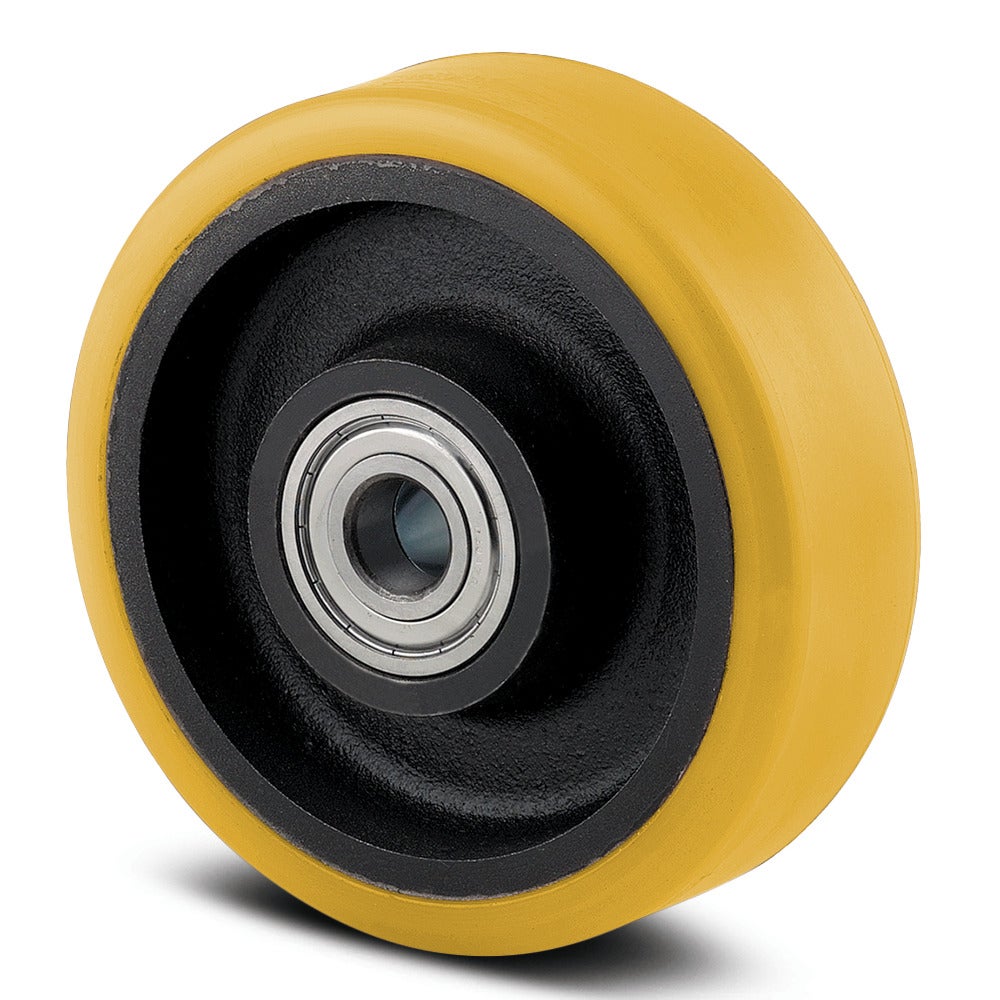
The Novatech wheel is a precision-engineered castor component designed for demanding industrial applications including airport equipment, AMR systems, automated shuttle systems, automotive OEM, ceramic and glass manufacturers, container construction, fire fighting technology, forklift trucks, AGV systems, machine construction, post logistic systems, production and platform trolleys, and transport equipment. This wheel features a cast iron body with a PUR casted premium tread measuring 80 mm in width, delivering exceptional durability and performance across diverse operational environments. The wheel has an overall diameter of 250 mm with a hub length of 90 mm and an axle hole diameter of 35 mm, accommodating standard castor mounting configurations. Equipped with a precision ball bearing for smooth rotation, the Novatech wheel offers a static load capacity of 4320 kg, whilst dynamic load capacities reach 2160 kg at 4 km/h or 1800 kg at 6 km/h, making it suitable for both heavy-duty stationary applications and mobile transport systems requiring reliable performance under sustained operational demands.
Wheel 300 mm
The Novatech wheel is a precision-engineered castor component featuring a cast iron body with a PUR casted premium tread measuring 50 mm in width. The wheel has an overall diameter of 300 mm and is equipped with a hub length of 62 mm, accommodating an axle hole diameter of 25 mm. Supported by a precision ball bearing for smooth operation, this wheel delivers exceptional performance across diverse industrial applications including airport equipment, AMR systems, automated shuttle systems, automotive OEM, ceramic and glass manufacturing, container construction, fire fighting technology, forklift trucks, AGV systems, machine construction, post logistic systems, production and platform trolleys, and transport equipment. The wheel offers a static load capacity of 3360 kg, whilst dynamic load capacity reaches 1400 kg at 6 km/h or 1680 kg at 4 km/h, making it suitable for demanding industrial environments requiring reliable and durable castor solutions.

Wheel 160 mm
The Basetech Wheel is a polypropylene castor wheel designed for roll cages and store fixtures and display applications, featuring a diameter of 160 mm with a tread width of 40 mm that is identical with the wheel body. The wheel is equipped with a roller bearing and incorporates a hub length of 58 mm with an axle hole diameter of 15 mm. This wheel demonstrates a static load capacity of 600 kg and a dynamic load capacity of 300 kg at a speed of 4 km/h, making it suitable for demanding industrial and commercial environments requiring reliable performance and durability.
Wheel 150 mm
The Duratech wheel is a precision castor wheel manufactured from polyamide, featuring a diameter of 150 mm with a tread width of 44 mm that is identical with the wheel body material. The hub length measures 60 mm, and the wheel is fitted with a precision ball bearing and an axle hole diameter of 20 mm. This wheel is engineered to support a static load capacity of 1000 kg and a dynamic load capacity of 500 kg at 4 km/h, making it suitable for demanding applications including automotive OEM, container construction, electronic systems and clean-room technology, machine construction, production and platform trolleys, roll cages, store fixtures and display systems, and transport equipment.
Wheel 150 mm
The Duratech wheel is a polyamide castor wheel engineered for demanding industrial applications including automotive OEM, container construction, electronic systems and clean-room technology, machine construction, production and platform trolleys, roll cages, store fixtures and display systems, and transport equipment. The wheel features a diameter of 150 mm with a tread width of 44 mm, identical in material composition to the wheel body. The hub length measures 60 mm, and the axle accommodates a hole diameter of 25 mm. The wheel is equipped with a precision ball bearing for smooth operation and reliable performance. With a static load capacity of 1000 kg and a dynamic load capacity of 500 kg at 4 km/h, this wheel delivers robust performance across diverse industrial environments and operational demands.

Wheel 250 mm
The Duratech wheel is a precision castor wheel manufactured from polyamide, featuring a diameter of 250 mm with a tread width of 50 mm that is identical with the wheel body material. The hub length measures 60 mm, and the wheel is fitted with a precision ball bearing and an axle hole diameter of 20 mm. This wheel demonstrates a static load capacity of 2000 kg and a dynamic load capacity of 1000 kg at 4 km/h, making it suitable for demanding applications including automotive OEM, container construction, electronic systems and clean-room technology, machine construction, production and platform trolleys, roll cages, store fixtures and display systems, and transport equipment.
Wheel 250 mm
The Duratech wheel is a polyamide castor wheel designed for demanding industrial applications including automotive OEM, container construction, electronic systems and clean-room technology, machine construction, production and platform trolleys, roll cages, store fixtures and display systems, and transport equipment. The wheel features a diameter of 250 mm with a tread width of 50 mm, identical in material composition to the wheel body. The hub length measures 60 mm, and the axle accommodates a hole diameter of 25 mm. The wheel is equipped with a precision ball bearing for smooth operation. Load capacity specifications indicate a static load rating of 2000 kg and a dynamic load rating of 1000 kg at 4 km/h, making it suitable for both stationary and mobile castor applications requiring reliable performance in industrial environments.
Wheel 200 mm
The Duratech wheel is a polyamide castor wheel engineered for demanding industrial applications including automotive OEM, container construction, electronic systems and clean-room technology, machine construction, production and platform trolleys, roll cages, store fixtures and display systems, and transport equipment. The wheel features a diameter of 200 mm with a tread width of 50 mm, identical in material composition to the wheel body. The hub length measures 58 mm, and the axle accommodates a hole diameter of 25 mm. The wheel is equipped with a roller bearing for smooth operation and reliable performance. Load capacity specifications indicate a static load rating of 1400 kg and a dynamic load rating of 700 kg at 4 km/h, making this wheel suitable for both stationary and mobile castor applications requiring robust load-bearing capability.

Wheel 150 mm
The Puretech wheel is a precision castor component manufactured from polypropylene with a solid rubber, non-marking tread measuring 32 mm in width. This wheel features a diameter of 150 mm and incorporates a precision ball bearing for smooth operation. The hub length measures 36.5 mm, with an axle hole diameter of 8.3 mm to accommodate standard castor fittings. The wheel demonstrates a static load capacity of 160 kg and a dynamic load capacity of 80 kg at speeds up to 3 km/h, making it suitable for a diverse range of applications including scaffolding, shopping trolleys, store fixtures and display units, tool cabinets, waste disposal equipment, work benches, and transport equipment.

Wheel 160 mm
The Maxtech wheel is a precision castor component engineered for demanding industrial applications, featuring a polyamide body with an injected polyurethane tread measuring 40 mm in width. The wheel has an overall diameter of 160 mm with a hub length of 60 mm and an axle hole diameter of 20 mm, accommodating standard castor assemblies. Equipped with a precision ball bearing for smooth operation, this wheel delivers a static load capacity of 700 kg, whilst maintaining dynamic load capacities of 300 kg at 6 km/h and 350 kg at 4 km/h. The Maxtech wheel is ideally suited for airport equipment, automotive OEM applications, ceramic and glass manufacturing, container construction, machine construction, production and platform trolleys, scaffolding, tool cabinets, waste disposal equipment, work benches, and general transport equipment, making it a versatile solution for diverse industrial environments requiring reliable mobility and durability.
Wheel 300 mm
The Elastech wheel is a precision castor wheel engineered for demanding industrial applications, featuring a 300 mm diameter with a 55 mm wide elastic tire, non-marking, vulcanized tread that ensures optimal grip and floor protection. The wheel is constructed with an aluminium body and incorporates a precision ball bearing for smooth, reliable rotation, whilst the hub measures 60 mm in length and accommodates a 25 mm axle hole diameter. This wheel delivers exceptional load-bearing capabilities, with a static load capacity of 1200 kg, and dynamic load capacities of 480 kg at 6 km/h or 600 kg at 4 km/h, making it suitable for a diverse range of applications including AMR systems, automated shuttle systems, automotive OEM, catering carts and meal delivery systems, container construction, fire fighting technology, machine construction, post logistic systems, production and platform trolleys, professional cleaning carts, roll cages, scaffolding, tool cabinets, transport equipment, and work benches.